Growing up, it was easy to see definitive physical differences between my classmates and me. It was difficult, however, to discriminate and alienate classmates based on these differences, an action which seemingly grew easier for everyone through time. In elementary school, skin color, hair color, and gender didn't decide who I became friends with or who I talked to. As we grew older, we allowed these differences to form societal cliques, and it was easy to label others based on physical attributes: nerds, Asians, jocks, the "popular" ones. The desire to want to seem "cool" or to fit in with "popular" people seemed almost an innocent, childlike act at the time. With the passage of time, however, this desire grows into an unhealthy adult obsession to attain beauty ideals established by a broken and enabling society and reinforced by repetitive images present in "every billboard, every movie, every glance" (39).
In
The Bluest Eye,Claudia realizes that her enemies are not "the Maureen Peals of the world" (74); rather, they are the those who decide what constitutes beauty and who insinuate these beauty ideals. The aggressor and "the thing to fear"(74), therefore, would mainly be society. In most cases, it's easy to blame society for the wrongs that need to be written right. In doing so, we remove any intimacy and responsibility from taking part in perpetuating societal standards. Furthermore, simply placing the blame on society does nothing in light of progressing solutions to the longstanding beauty ideals. Therefore, it is incumbent upon all of us, regardless of race or gender, to abandon and stop consuming society's standards.

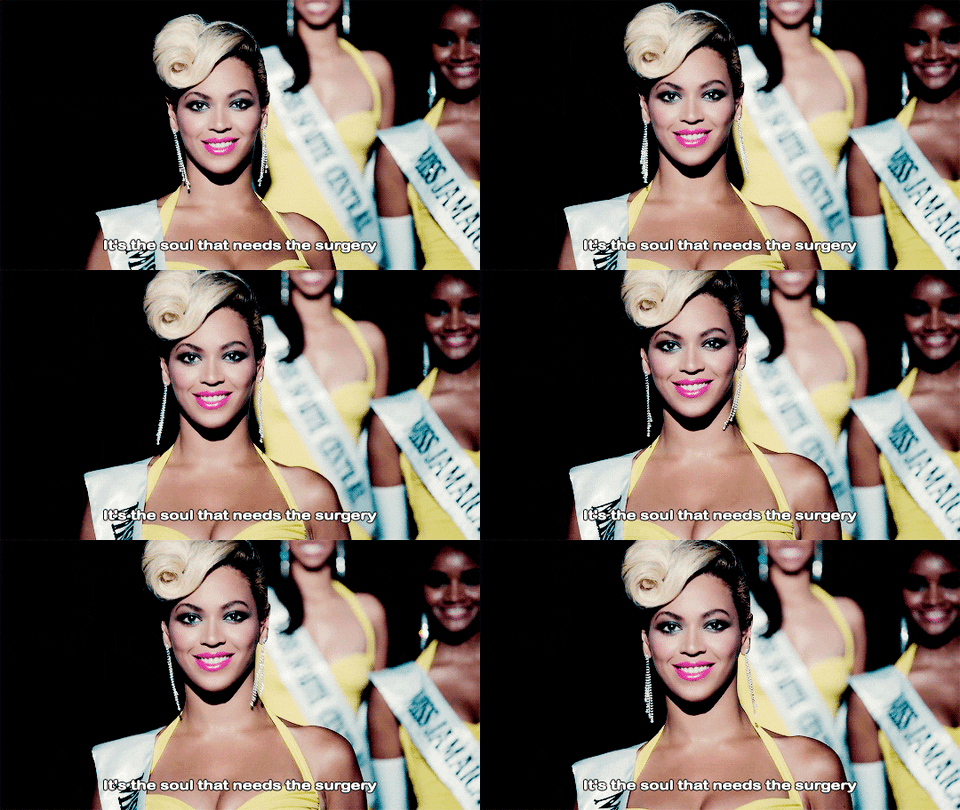

I totally agree with your stance. There's no reason for us to "consume" these standards. They just divide us, and anything that separates people should be looked down upon.
ReplyDeleteGreat post Michael. I agree with you in that rather than just placing the blame we must stop consuming the standards created by society. Morrison perfectly illustrates this through her use of the Mary Jane candy, as Pecola literally tries to consume the beauty standards.
ReplyDeleteI really enjoyed reading the part about blaming society. I agree; it's easy to blame something intangible, like society, for our problems, but doing so won't solve anything. Everyone has some role, regardless of whether it's large or small to do what they think is right.
ReplyDelete